What is a true Connemara? The definition has been a moving target for more than a century
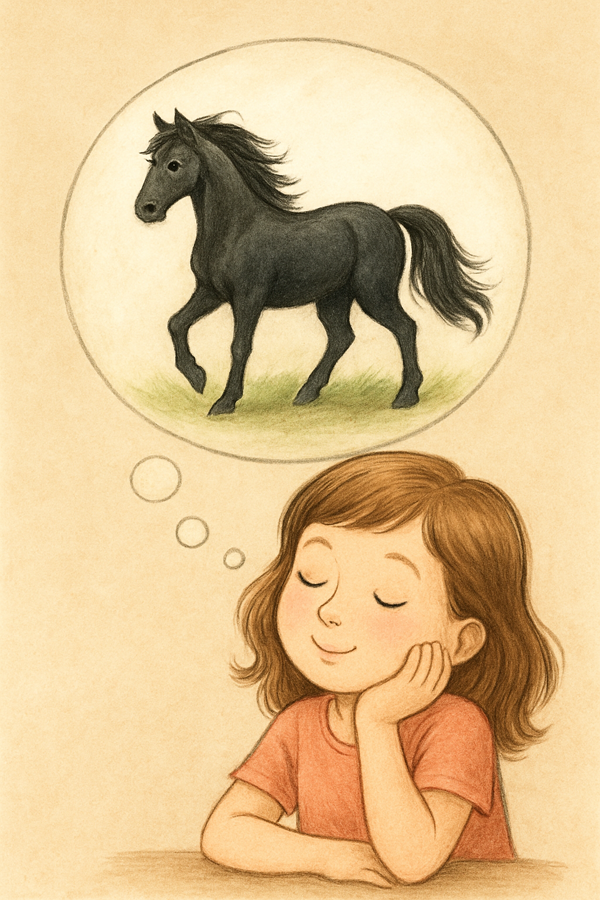
What is a true Connemara?
It’s a question that the American Connemara Pony Society has pivoted on many times since the group’s founding in 1956 and one that Ireland’s Michael J. O’Malley tried to address in public writings in 1912 when he pushed his countrymen to preserve the best traits of the Connemara.
ACPS President Peter Goltra formed his own answer in the 1978 Spring Issue of the ACPS “News,” when he said all members had an image in their head of what a Connemara should be, as if that was the actual answer. He then referred to a statement by veterinarian George Allen, DVM, who had just reviewed a parade of different looking Connemaras as part of an event at an ACPS annual meeting. Allen had said the differences in conformation in front of him made it difficult to realize that the ponies were all the same breed.
Goltra said: “Although many breeders, including myself, have in the past formed particular images of what Connemaras should look and be like, it has become clear that the strength of the Connemara breed lies in its heterozygosity (genetic variation) and the varied aptitudes lying therein.”
That’s from a guy who owned the white stallion Aladdin but still acknowledged there were many valid Connemara types suited for different activities.
To those interested in buying a Connemara now:
The Connemara is a fabulous breed for many endeavors. Connemaras indeed come in many shapes and sizes, some with more athletic builds. If you are looking for a Connemara to do extended aerobic work, find one built for it. Don’t pay attention to the political pressures of the society. Use the society for what it was originally intended: to register your Connemara and track your points. But use your head to buy a body type suited for your needs. Read on to understand the history of the Connemara look. Be sure to go at least as far as the section on the society considering dropping the word “pony” from its name.
What does a true Connemara look like?
Connemara looks have always varied, reflecting the diverse genes in the breed, but this has been especially true in America if one compares the horses from various lines. For example, Connemaras from the famed Hideaway Farm and their descendants at Greystone Farm and elsewhere tended to be strapping brown or bay athletes with a similar confident expression. The offspring of *Texas Hope — the most popular stallion in the US from the mid-1950s to the mid-1970s — often were perky, pony-size performers bearing a strong resemblance to their sire. The offspring of Camus John and Camus John’s Gladiator were routinely bay or brown ponies that had gentle auras while also being hugely dependable performers. And, then, there were so many gray, dun and roan offspring of many other stallions, with a big range of looks, personalities and talents, that it would be harder at a quick glance to name their ancestors, at least in our opinion.
What color should a Connemara be?
In some people’s minds, the gray — or white — Connemaras were the classic look, just as pinto-patterned ponies would be considered the classic look for the Chincoteague pony. But, solid-colored Chincoteague ponies exist, too, and are just as valid. The same can be said for dark-colored Connemaras. In Stud Books I, II and III, covering 1956-1964, dark-colored Connemaras (brown, bay and black) accounted for about 20 percent of the 489 fullbred registered Connemaras in the US. That was at the start of the ACPS, when Connemaras were imported to the US from Ireland.
White Connemaras no longer seem to be the preferred color in the US, based on classified ads on the ACPS website.
America now understands that gray Connemaras have a high risk of developing melanoma due to the gene that turns them gray, based on research at UC Davis in which the ACPS participated. The faster the Connemara turns gray, the higher the risk. Some Connemara breeders are now pointing out that their Connemaras have no gray genes at all when they advertise them for sale.
Ireland has other priorities.
White, heavy-boned cresty-necked Connemaras are the ones honored with awards:
I believe the white preference in Ireland is a marketing message more than anything else. Ireland is dependent on tourism to survive, and a main message is “come see our white ponies.” If Connemaras’ looks were diverse in Ireland, the message would lose something as a sales pitch.
Is Ireland marketing the true Connemara or is it creating an illusion that it believes is alluring? White horses have been alluring to audiences forever.
The ACPS started allowing Connemara pintos and paints to be registered as halfbreds in 1986, but the society at the same time removed the ability to register a halfbred’s fifth-generation offspring as a fullbred to make sure those colors didn’t get spread.
Pintos and paints are not considered true Connemaras.
Is a true Connemara a blue-eyed cream? Yes, no and yes.
The first mare registered in the ACPS, Wicklow Mountain Rose Bay, was a blue-eyed cream. She was an Irish import owned by founding ACPS member Charlotte Read of Round Robin Farm. Read was the first secretary of the ACPS.
The ACPS allowed registration of blue-eyed creams from 1956 until 1967, when it instituted a ban following Ireland’s ban. Subsequently, scientists within the society, including Marian “Doc” Molthan, a pediatric cardiologist and ACPS president in the 1980s, begged publicly for the ban to be lifted because it was based on discrimination and excluded valuable Connemaras, but to no avail. The US didn’t remove that ban until 2016, 49 years after it was created and long after Doc died in 2004, again following Ireland’s whims. Today, a Connemara can have blue eyes. But blue-eyed Connemaras shouldn’t get too comfortable because history has shown that the ACPS can reverse its rules overnight.
What size bone does a true Connemara have?
Bone size has been the most thorny issue.
The bone quality of a Connemara is judged by the Connemara’s cannon bone circumference.
The breed standard in the US from 1956 to 2025 has been a cannon bone circumference of 7 to 8 inches for a pony.
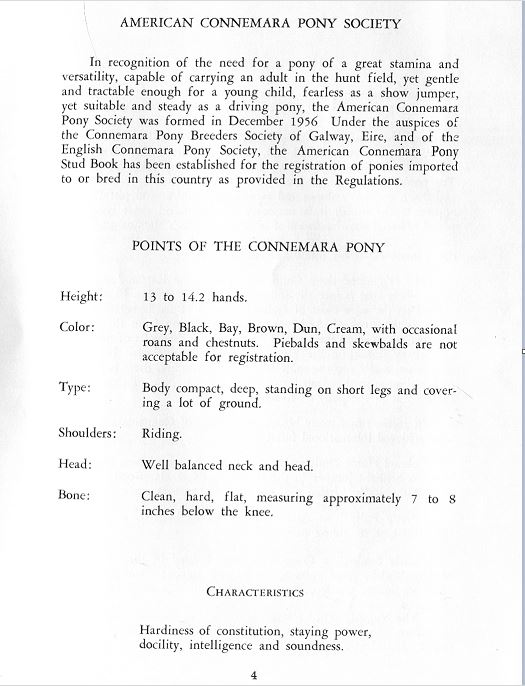
Connemara breed standard defined in ACPS Stud Book 1, published in 1959.
Recently, the upper end of the breed standard has changed to “more than 8 inches” for a horse.
I can’t tell when that happened by following changes on the ACPS website because the society removed the cannon bone size from its breed standard online in 2014; I know the number conflicted with the inspection criteria on the website at the same time, making the ACPS look inconsistent.
Removing the cannon bone size from the website doesn’t mean there isn’t a breed standard.
The USEF Rule Book available online as of Aug. 30, 2025, says there is one. See below.
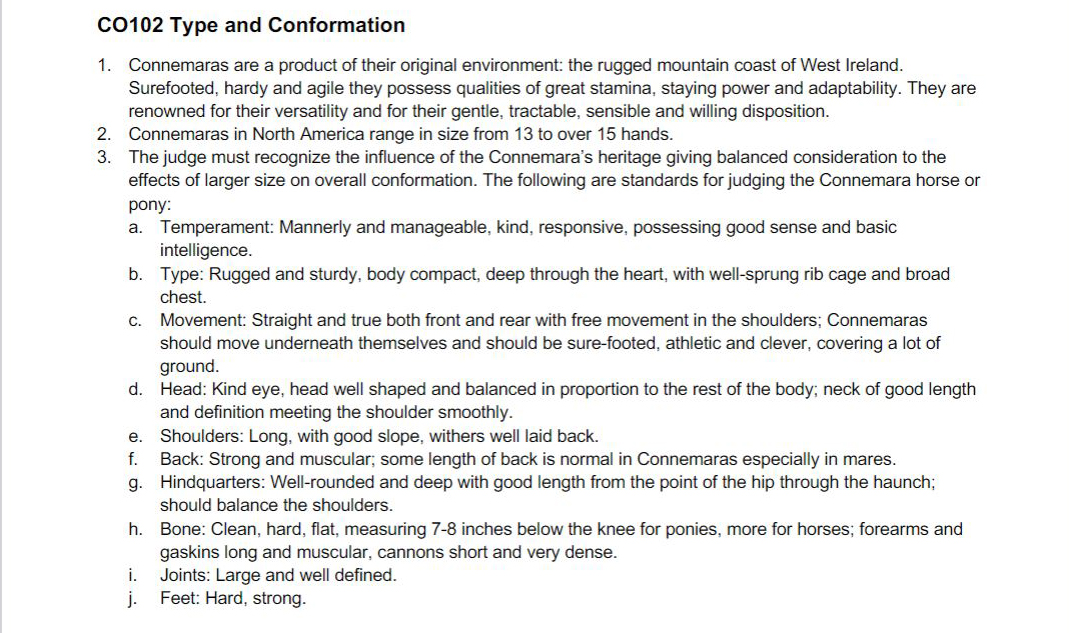
USEF Rule Book in 2025 on Connemara type
As you can see from comparing the two images, the “more for horses” line after “7-8 inches” in the USEF Rule Book is new. It wasn’t there in 1959, and it wasn’t there in 2013, the last time the breed standard for cannon bone was fully displayed on the ACPS website.
A Connemara has to be a pony (under 148 cm, or 14.2 ¼) to pass an ACPS inspection and get in the special stud book for the so-called true Connemaras.
If the inspections are designed to save the true Connemara, as the head of inspections has said publicly at annual meetings, then Connemaras over pony size are not the true Connemara and their big legs, greater than 8 inches, would not represent the true Connemara either, right?
Trying to show my work here as I follow the logic.
Let’s run through it again.
Inspection criteria limit the true Connemara to a pony.
If one looks at the breed standard across the globe for a Connemara cannon bone, including the official breed standard in the USEF Rule Book in 2025, the cannon bone should be 7 to 8 inches for a pony.
Logic then says the true Connemara should not have cannon bones bigger than 8 inches.
What does a Connemara with an 8-inch cannon bone look like?
Our 14-2 hand stallion was called “not the right type” in 2005 by an ACPS official who was the most prolific Connemara inspector at the time, after she failed another Connemara stallion that she told us was black and sleek and looked just like our stallion. She said she failed the other stallion because it was not the right type, either. She acknowledged that the failed stallion was nice by anyone’s standards, but she still failed it.
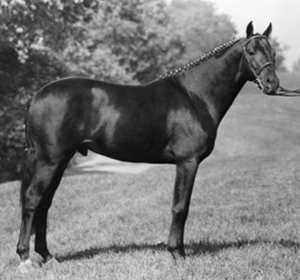
Our stallion, Lynfields Kiltuck, with a cannon bone of 8 inches.
Our stallion’s cannon bone was the maximum of the ACPS breed standard at 8 inches.
That makes his bone size the upper limit of the breed standard, which would make him exactly the true Connemara bone type, wouldn’t it?
So, based on the inspector’s comments, does the breed standard, the official blue print of the Connemara, not actually capture what is a true Connemara? The 7 to 8 inch cannon bone is publicly displayed as the breed standard of the Irish, English and Australian Connemara societies on their websites. Are those societies wrong about what is the true Connemara, too, according to this inspector, who thinks that Connemaras meeting the measurements perfectly are too refined?
Ireland fumbled the breed standard first
This lack of consistency got started in Ireland.
Going back to the early 1900s in Ireland, Michael J. O’Malley — credited with saving the Connemara pony as a distinct breed and founding the Connemara Pony Breeders Society in Ireland in 1923 — said in published writings available to all in 1912 — and to ACPS officials in a republished book in 1986 — that he wanted to hold onto the Connemara spirit. That was the true Connemara. O’Malley specifically called for an animal durable and willing enough to engage in extended use.

Connemara Ponies, a booklet compiled by Michael J. O’Malley, in which he defines the true Connemara
O’Malley also was specific on looks and said a refined Connemara type was just as valid as a coarse type of Connemara. His words indicate he was concerned that the Connemara would be defined as a bigger-boned animal. His dad owned a small, black, refined mare, named Blackeen. He didn’t want Ireland to erase the existence of the Blackeens out there.
Mostly, O’Malley seemed to say that evaluating a true Connemara required looking at its athletic build and work ethic.
Against O’Malley’s plea, the CPBS chose and continues to choose to promote a big-boned, gray or white Connemara that doesn’t look built for galloping around a cross country course or jumping big jumps.
How tall should the true Connemara be?
Nowhere has the ACPS bounced around more than on height.
Initially, in 1957, ACPS officials insisted that Connemaras fall within the height range of 13-2 to 14 hands. The upper limit was raised to 14-2 hands in 1958. Connemaras outside those ranges had to be registered as halfbreds, though the ACPS didn’t follow the rule 100 percent of the time. A fair number of Connemaras wound up in the halfbred section due to their small height, but Whitewood Irish Eve was registered as a fullbred mare in Stud Book I despite her height of 14.2 1/2 hands.
In the 1960s, the ACPS tried to create a new Section II designation for horses while registering them as fullbreds in the regular fullbred section, as if typing Section II next to their name was enough to make them true Connemaras, but that plan disappeared quickly because tall Connemaras were everywhere. Apparently, no one wanted to litter the Stud Book with “Section II” written all over the place.
It didn’t take long before some Connemara owners stopped reporting a height at all when registering a Connemara with the ACPS. Of the 1,972 Connemaras and halfbreds registered through Stud Book XVII, 154 didn’t have a listed height; 114 of those were fullbreds. The non-reporters often were Connemara officials.
And, honestly, the heights in the stud books are typically off quite a bit from the full height of Connemaras, so how does the ACPS regulate something it can’t track properly?
Connemaras were definitely getting taller.
Hideaway Farm’s Connemaras in particular were consistently 15 hands or taller.
Karen Lende’s famed eventer from Hideaway farm, Erin’s Shamrock, was 15 hands.
Hideaway Farm’s own famous eventing stallion, Hideaway’s Erin Go Bragh, sire of more than 225 offspring, was 15-2 hands.
Similarly, stallion Hideaway’s Erin Tooreen was 15-2 hands.
Stallion Gilnocky Mullingar was 15-2 hands, as was stallion Balius Rhyddspence.
Stallion Greystone McErrill was 15-3 hands. Stallion Aladdin’s Denver was 15-1 hands at age 3, while stallion Aladdin’s Owen was 15 hands at age 4.
I took those heights from ads or other material published by the owners.
The Winter 1980 ACPS newsletter included four display ads for fullbred Connemaras, with three being 15 hands or taller.
I could keep listing Connemaras 15 hands or taller for a long time here, because I knew a dozen just in my city alone in the 1970s, but I’ll stop.
Did the word ‘pony’ misrepresent the true Connemara in the US?
By 1981, so many Connemaras were horses that the American Connemara Pony Society approved removing the word “pony” after “Connemara” in all its material, while it strongly considered removing “pony” from its name.
This discussion is in the minutes of the annual meeting in 1981, held in St. Louis, Missouri. It’s in the part of the meeting after it reconvened.
The discussion followed a similar one at the 1980 annual meeting and began in a review of Judy Heishin’s efforts to persuade the AHSA (now US Equestrian) to let adults ride Connemaras, regardless of height, in open classes.
Laura Carpenter, ACPS horse show chairman in 1980, agreed to ask the AHSA whether dropping the word “pony” from the Connemara Division rules in the AHSA Rule Book would be effective in this regard (allowing adults to ride Connemaras, including ponies, in open classes).
At the 1981 annual meeting, Carpenter, still horse show chairman, asked members again about dropping the word “pony,” not just from the AHSA Rule Book, but also the society’s name.
Longtime ACPS official Dorothy Lyons, one of the most influential ACPS officials in the 1970s and 1980s and official ACPS historian at one point, said dropping the word “pony” might mean losing the image of the Irish breed, but she had become convinced that the advantages to the breed in the US would outweigh the disadvantages.
A motion by Carpenter to delete “pony” wherever it appeared in the AHSA Rule Book, except in the name American Connemara Pony Society, was seconded by ACPS member Joan McKenna Sr. and was carried by a vote of the members.
Discussion of whether to delete the word “pony” from the name of the society at the same meeting was inconclusive.
The meeting minutes, written by Secretary Betty O’Brien, said the sense of the meeting seemed in favor of dropping “pony” from the ACPS name, but it was pointed out that a change of by-laws would be required. “Doc” Molthan, then-ACPS president, felt that such a question should be presented to the full membership and appointed an ad hoc committee to create a questionnaire for the purpose.
Fast forward to the 2004-2005 era, when the society began mandatory inspections of fullbreds if those Connemaras wanted to be included in a special stud book separate from the registry for all registered Connemaras. This special stud book allowed in only true Connemaras.
These true Connemaras had to be ponies!
Whiplash.
The criteria for inspection, as of 2025, says: “The minimum height at inspection is 128 cms (12.2 ½ hands) and the maximum height at inspection is 148 cms (14.2 ¼ hands). CN* Allowances will be made for mature Connemara ponies; however, any pony measuring 15 hands or over should be presented with a signed veterinarian statement indicating the under-maximum height of the pony at age 2.”
Not once have I ever seen an explanation for what CN* means. If there’s supposed to be a footnote, there never is, so I can’t explain what that means.
As I’ve said in the past, any veterinarian who signs a statement that he or she measured a now 15-hand Connemara at age 2 (perhaps just randomly walking around someone’s barn with a stick?) and knows that Connemara was under 14-2 ¼ hands at age 2 should have his or her license reviewed. In addition, I would ask David O’Connor’s FEI/US Equestrian’s social license program to look into those veterinarians because their actions would not pass the sniff test of behavior the general public would accept.
How did the ACPS go from Point A to Point B?
So how did the society go from discussing removing “pony” from the society’s name because many Connemaras were horses anyway, to requiring the true Connemara be a pony again?
It’s the gap from 1981 to 2004, and I am not sure.
Our Connemaras were very valued in the ACPS when my mom died in a car crash in 1990. By 2005, I was receiving emails and letters from an ACPS inspector that our stallion would fail an inspection (if we were so stupid as to have him inspected). During those years, I was trying to survive and keep a roof over the head of our stallion. I didn’t see this discriminatory eugenics movement coming.
I can promise you this: I will read every page in every ACPS publication, plus dig into the motives of inspectors beyond what’s printed, until I find out what happened.
Did trips to Ireland move the needle?
I do know that APCS officials started making regular trips to Ireland in the 1980s, invited by Ireland’s CPBS officials to judge Connemara shows there and hang out with CPBS officials. Was that a big factor?
Did Ireland intentionally approach ACPS officials with an agenda to get ACPS officials to follow its marketing definition of a true Connemara? It certainly has to be considered.
How does money fit into creating the true Connemara?
The topic of money has to be brought up. It costs a lot to own a horse in 2025 and quite a bit more to show one. Does the true Connemara show anymore?
It’s much easier to follow a popular model of Connemara breeding in America these days — maintaining a heavy-boned stallion at home to be bred to Thoroughbreds for eventing, collecting stud fees with little expense or effort — than it is to campaign a performance stallion in the show ring or eventing world to develop its skills and mind and to get attention for young stock at home. The first scenario doesn’t require a Connemara stallion to be trained or have any athletic ability at all.
A Connemara inspection system that puts a premium label on thick-boned Connemaras, as it has been doing for 20 years, is the perfect marketing tool for this breeding-only scenario.
But I believe from experience that it is hugely important to know how your Connemara thinks and what it can do athletically before you breed it.
How much should a true Connemara cost?
In the 1970s, people were charging enough for Connemaras to keep their farms going ($1,500 to $5,000 at the very high end for trained adult Connemaras, including stellar Hideaway offspring), but the sellers weren’t making a killing with those prices.
Today, the big five- and six-figure prices ($20,000 to $100,000) for Connemaras in classified ads suggest that people want to make a killing.
“Doc” Molthan reported at the 1983 annual meeting that she was promoting Connemaras in Arizona as affordable horses during times of a poor economy. In her eyes, the true Connemara was for the average person.
I don’t think those days are coming back.
The true Connemara may be perfect for the average person, but the average person can’t afford a Connemara.
I have personally owned a Connemara now for 53 years consecutively, and I couldn’t afford to buy one today.
The true Connemara has come a long way indeed from its humble roots as a working animal for poor farmers who raised potato crops.
Have I defined a Connemara enough to inspect one based on the constantly changing definition of a Connemara since 1956?
No.
And, so, I end where I began. What is a true Connemara?
I believe that ACPS officials have repeatedly failed in their effort to define the Connemara because they all have conflicts of interest, being breeders themselves. Who wouldn’t define the true Connemara as their own?
But, against all the political strife, the Connemara has thrived in the US anyway.
I believe that nature should be in charge of defining what a true Connemara is because humans can’t be trusted with this important task.
So how about defining a true Connemera this way in the breed standard:
A true Connemara is the genetic offspring of a Connemara sire and Connemara dam. Nothing more. Nothing less. Nothing to be inspected into existence. Nothing to be tossed out because it doesn’t conform to a moving target. Nothing to be forced into a shape or color that doesn’t fit its history.
It is a genetic miracle that humans can’t claim as their own.